Where each question is addressed
- Reviewer STWD: the per-component speed decomposition, the matched-storage comparison and the kernel statistics will appear in the revised manuscript.
- Reviewer 7Qhu (lower-tier GPUs): laptop results.
- Reviewer NcgU (mipmapping, resolutions, GPU classes): mip-chain demos, HD and 4K and laptop results.
All results on this page will be included in the revised manuscript.
Mipmapping of the texture atlas
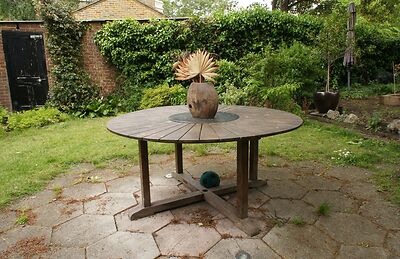
Each bundle is the paper's model plus six box-filtered coarser levels of every surfel tile, down to one texel, with no retraining. The viewer opens with anisotropic mipmapping on: each pixel samples the atlas at the level of its own texel footprint, with up to 16 taps along the long axis. The Mipmaps toggle in the panel switches back to level 0, the renderer used for the paper's results. Orbit slowly over the floor or the lawn and toggle to compare. Needs WebGPU: Chrome or Edge 113+ on a laptop or desktop.
Added results
HD and 4K on an RTX 5090, frames per second
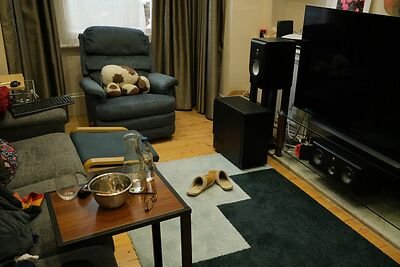
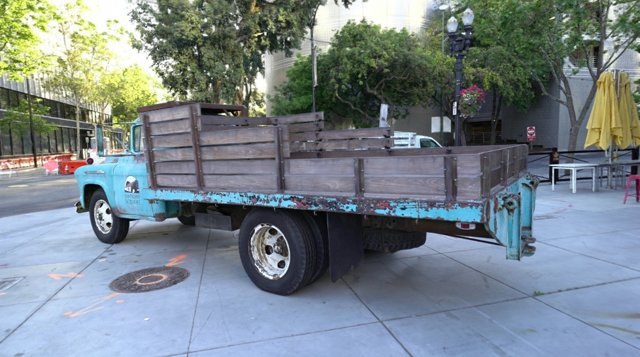
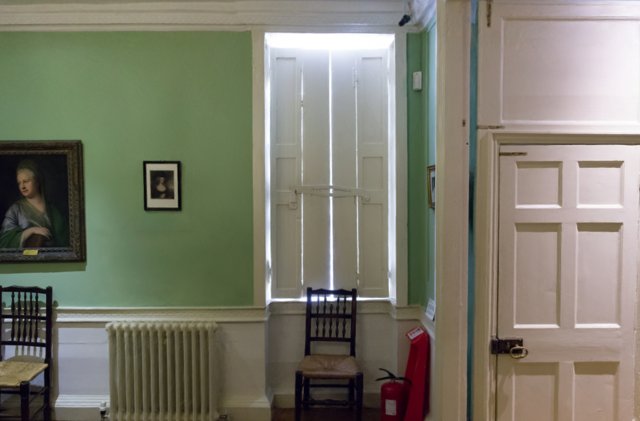
Held-out test cameras, SM clock locked at 2.4 GHz. CUDA = each method's own released renderer; HW = the same models through one hardware rasterizer (Vulkan), FastGS and Speedy-Splat with their own bounding boxes. Primitives: ours 63k / 85k / 66k / 149k, FastGS 207k / 253k / 252k / 661k, Speedy-Splat 119k / 257k / 314k / 535k (room / truck / drjohnson / garden). Garden ran at the unlocked clock and reads about 10 % high against the other three scenes.
| scene | resolution | ours CUDA | FastGS CUDA | Speedy CUDA | ours HW | FastGS HW | Speedy HW |
|---|---|---|---|---|---|---|---|
| room | 1920×1279 | 1287 | 1103 | 1169 | 2353 | 1459 | 1167 |
| room | 3840×2558 | 469 | 635 | 622 | 884 | 485 | 358 |
| truck | 1920×1070 | 990 | 1082 | 1039 | 1472 | 1165 | 899 |
| truck | 3840×2141 | 314 | 630 | 541 | 462 | 405 | 296 |
| drjohnson | 1920×1262 | 1120 | 1065 | 1055 | 2654 | 1706 | 1270 |
| drjohnson | 3840×2525 | 360 | 544 | 540 | 895 | 552 | 401 |
| garden | 1920×1244 | 1052 | 932 | 826 | 1918 | 1108 | 950 |
| garden | 3840×2488 | 384 | 590 | 504 | 705 | 507 | 384 |
On the hardware rasterizer ours is fastest in every cell and the lead grows with resolution. On the software path our fragment is more expensive (ray/plane hit plus one texture fetch against one Gaussian evaluation), so at 4K the 3DGS-family renderers are ahead there.
Apple M3 Pro laptop (WebGPU), frames per second
| scene | resolution | ours | FastGS | Speedy-Splat |
|---|---|---|---|---|
| garden | evaluation | 297 | 199 | 228 |
| room | evaluation | 317 | 206 | 256 |
| truck | evaluation | 338 | 297 | 338 |
| drjohnson | evaluation | 442 | 289 | 328 |
| garden | 1920 wide | 176 | 137 | 159 |
| room | 1920 wide | 226 | 145 | 178 |
| truck | 1920 wide | 123 | 121 | 146 |
| drjohnson | 1920 wide | 241 | 162 | 192 |
| garden | 3840 wide | 55 | 52 | 59 |
| room | 3840 wide | 66 | 41 | 49 |
| truck | 3840 wide | 35 | 34 | 43 |
| drjohnson | 3840 wide | 67 | 45 | 55 |
MacBook Pro with an Apple M3 Pro, Chrome, WebGPU; FastGS and Speedy-Splat through the same WebGPU sort and blend, measured in the same session as ours. Primitives: ours 149k / 63k / 85k / 66k, FastGS 661k / 207k / 253k / 252k, Speedy-Splat 535k / 119k / 257k / 314k (garden / room / truck / drjohnson). On truck at 1920 and 3840 wide and on garden at 3840 wide our per-fragment cost (ray/plane hit and one texture fetch) outweighs our lower overdraw.